
The Emerging Pull of Greek Orthodoxy Amongst Young Men
Over the last several years, I’ve watched a noticeable shift happen among younger evangelicals. Some who once seemed completely committed to contemporary, non-denominational Christianity—wanting to plant churches, preach in sneakers, and build the next “relevant” ministry—have now moved hard in the opposite direction. Instead of casual Christianity, they’ve embraced highly formal traditions like Eastern Orthodoxy, Roman Catholicism, or Anglicanism.
For many Christians, that raises an honest question, and it’s one that we were asked in our “Ask the Pastor” series:
Are those in the Orthodox Church as off in their theology or beliefs as the Catholic Church?
That’s an important question, and one worth answering carefully, historically, and biblically.
Why does Orthodoxy appeal to so many people?
Part of Orthodoxy’s appeal is understandable.
It feels ancient, stable, reverent, and intellectually serious. In a world filled with shallow entertainment and emotionally driven religion, Orthodoxy offers candles, incense, stained glass, ancient hymns, and a worship atmosphere that feels transcendent.
For many people, especially young men, that feels refreshing.
Orthodox worship is intentionally formal and deeply rooted in tradition. Their hymns are often centuries old and are treated as doctrinally significant. Unlike modern worship cultures that constantly introduce new songs and trends, Orthodoxy feels fixed and grounded.
There is also an intellectual attraction. Some evangelicals grew tired of churches that focused heavily on emotional experiences but neglected serious doctrine and theology. Orthodoxy presents itself as thoughtful, historical, and connected to the earliest centuries of Christianity.
And unlike Catholicism, Orthodoxy can feel less familiar and therefore more intriguing. If someone is drawn to “historic Christianity,” Orthodoxy claims roots in places like Antioch and Constantinople rather than Rome alone.
But attraction alone does not determine truth.
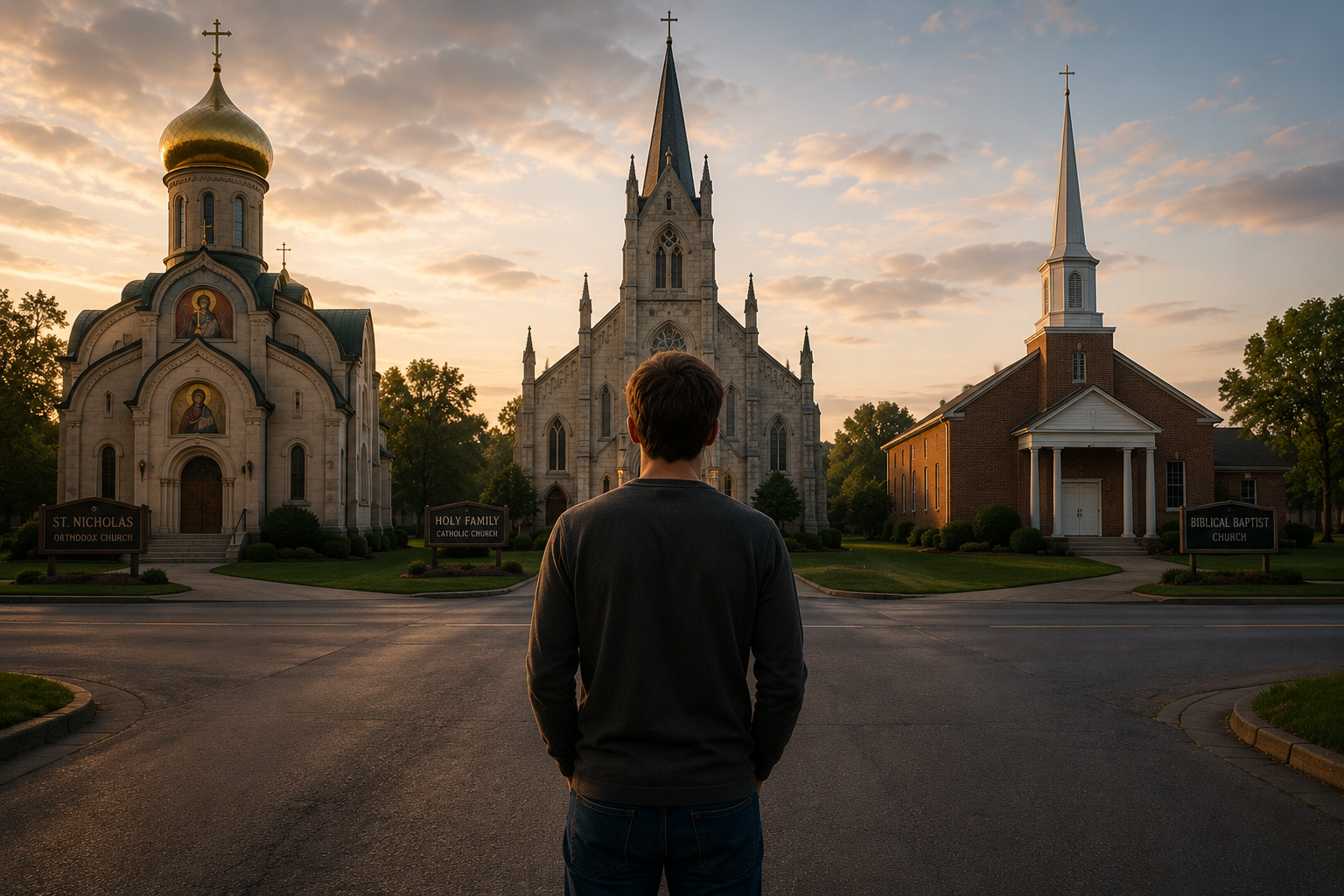
A Brief History of Orthodoxy
To understand Orthodoxy, we need to understand where it came from.
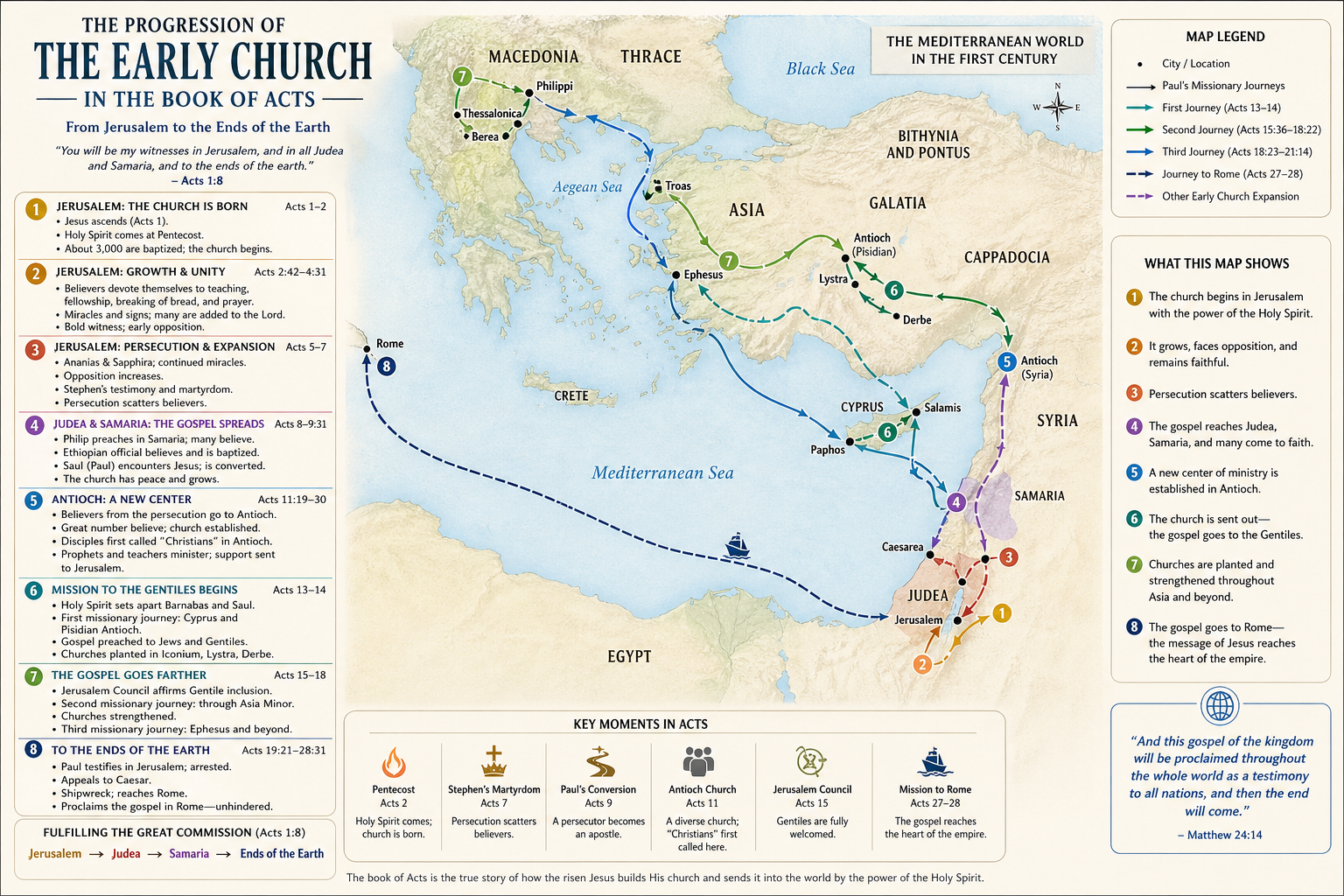
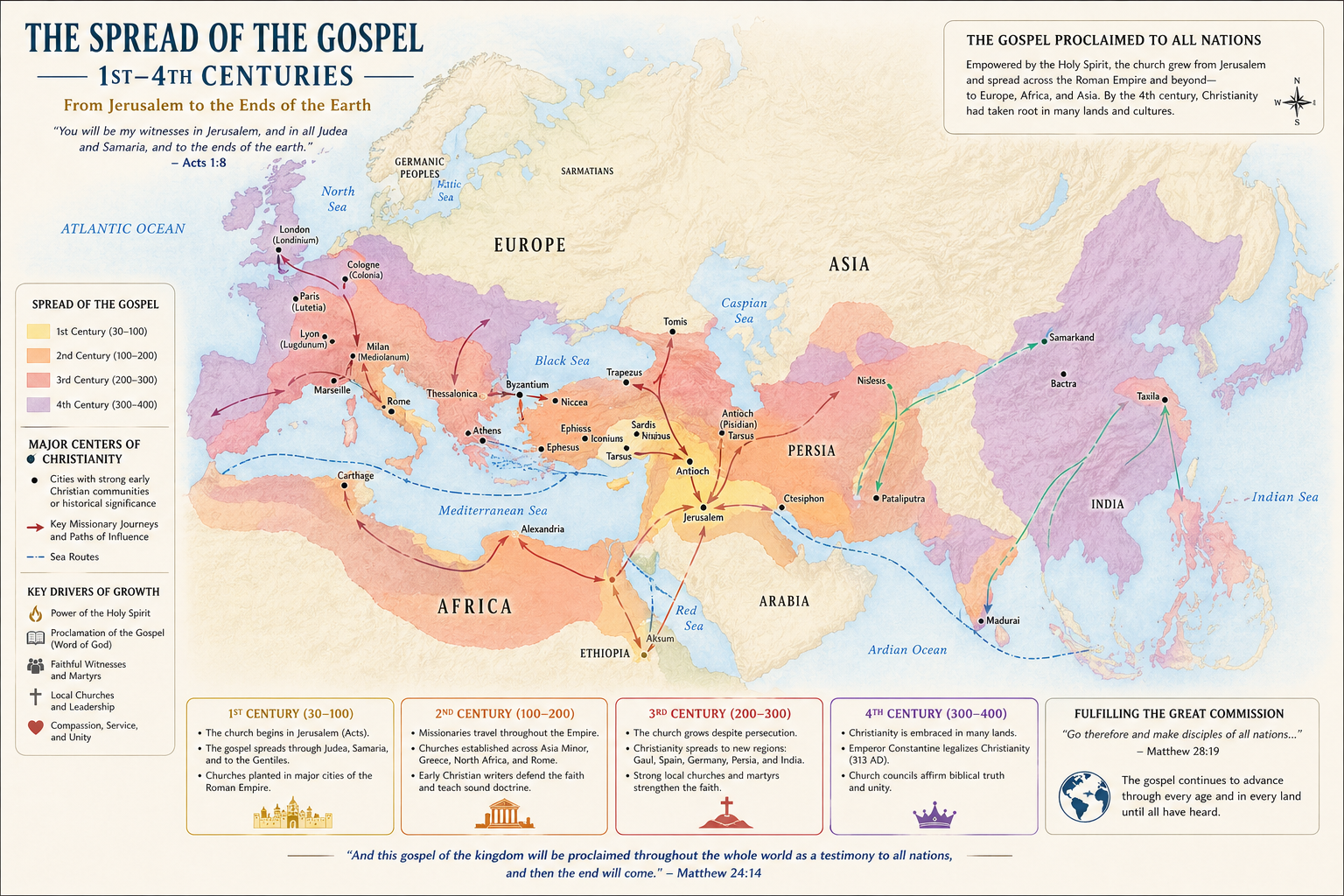
Early Christianity spread rapidly throughout the Roman Empire in cities like Jerusalem, Antioch, Alexandria, and Rome. The early church existed as a growing network of local congregations united around the Gospel of Christ.
Over time, Christianity became increasingly organized, especially after Constantine legalized Christianity in 313 AD. The church moved from being a persecuted minority to a central cultural force.
As centuries passed, tensions developed between the church leaders in Rome and Constantinople. These tensions included disagreements about:
- The authority of the Pope
- The “Filioque” clause in the Nicene Creed
- Cultural and political differences between East and West
Eventually, the church split in what became known as the Great Schism of 1054.
The Western church became Roman Catholicism.
The Eastern church became Eastern Orthodoxy.
From there, Orthodoxy expanded heavily into Slavic nations like Russia, Bulgaria, and Serbia and eventually developed into various regional Orthodox expressions.
So, is orthodoxy thelogically wrong?
1. Orthodoxy Rejects Scripture Alone as Final Authority.
-
Church fathers
-
Ecumenical councils
-
Church liturgy
-
Historical tradition
“All scripture is given by inspiration of God… that the man of God may be perfect, throughly furnished unto all good works.” — 2 Timothy 3:16–17
2. Orthodoxy Holds to a Faulty View of Salvation
3. Orthodoxy Elevates Tradition Beyond Scripture
4. Orthodoxy Contains Serious Doctrinal Problems
-
Prayers connected to Mary and the saints
-
Sacramental salvation
-
Veneration of icons
-
Mystical teachings about the afterlife
-
A priestly mediation system
Is Orthodoxy the same as Catholicism?
The Real Solution Is Not Formality—It’s Biblical Truth
-
Shallow teaching
-
Consumer-driven worship
-
Emotionalism
-
Casualness toward God
“Let us have grace, whereby we may serve God acceptably with reverence and godly fear.” — Hebrews 12:28